
City Comparison: New York City vs Miami

By William David
June 18, 2025
2 min read
Thinking of trading New York’s fast-paced hustle for Miami’s laid-back lifestyle? This guide compares the two cities side-by-side, from cost of living and job markets to weather, housing, and more to help you make an informed moving decision.
Cost of Living
The financial aspect is often the first consideration for any move. Here's a direct comparison of what you can expect your expenses to look like in the Big Apple versus the Magic City.
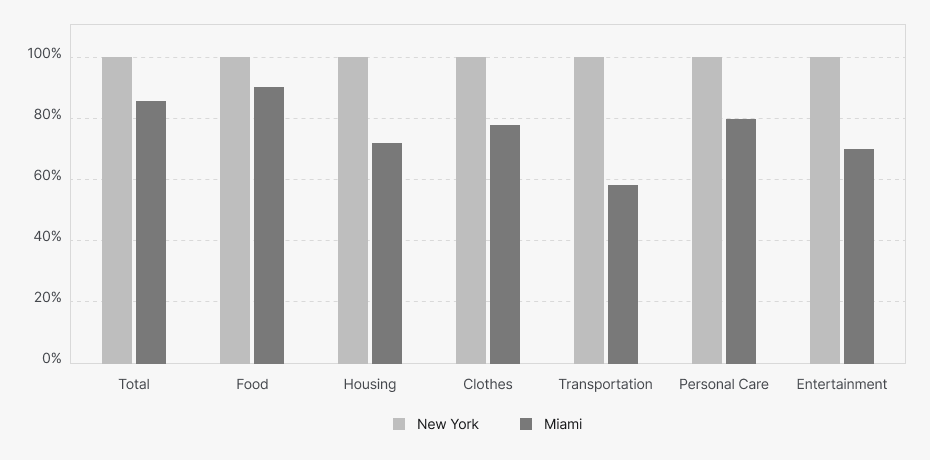
It's no secret that New York City holds the crown for high living expenses, with housing costs significantly impacting the average resident's budget. Miami, while also growing in price, still offers considerably more breathing room, particularly in real estate. This difference extends beyond rent and mortgages, influencing everything from groceries to entertainment, fundamentally altering daily financial considerations for residents in each city.
Job Market & Salaries
Beyond costs, a city's economic landscape dictates career growth and opportunities. Let's explore the driving forces behind job markets in NYC and Miami.
| Metric | New York City | Miami |
|---|---|---|
| Avg Salary | $90,000 | $85,000 |
| Top Industries | Finance, Law, Media | Healthcare, Tech, Hospitality |
| Remote Work Opportunities | Very High | High |
| Unemployment Rate | 5.4% | 4.1% |
New York City remains a global powerhouse for finance, media, and fashion, offering unparalleled opportunities in these sectors. Miami, on the other hand, has rapidly evolved beyond its tourism roots, emerging as a burgeoning tech hub and a strong center for international trade and finance, particularly appealing to Latin American markets. While both offer robust economies, the nature of job opportunities can significantly shape a career path.
Housing & Real Estate
The roof over your head and the cost to keep the lights on represent significant portions of any budget. New York City and Miami offer vastly different experiences when it comes to housing type, cost, and availability. Understanding these differences is crucial for planning your move.
| Metric | New York City | Miami |
|---|---|---|
| Median Home Price | $850,000+ | $580,000 |
| 2BR Rent Avg | $4,200/month | $2,700/month |
| Apartment Size | Smaller | More spacious |
| Outdoor Amenities | Limited | Common (balconies, pools) |
New York City's housing market is famously competitive and expensive. The vast majority of residents live in apartments, ranging from historic brownstones and walk-ups to sprawling high-rise condos and co-ops. Space is a luxury, and many New Yorkers prioritize location over square footage. Finding an apartment can be a fast-paced process, often requiring quick decision-making. Utility costs, while manageable, add to the overall living expense, especially with heating in the colder months.
Miami, by contrast, offers more varied housing options, including a significant number of single-family homes, townhouses, and larger condos, particularly as you move away from the immediate beachfront. While prices have surged in recent years, especially in prime locations, you generally get more square footage for your money compared to NYC. The rental market is also competitive, but perhaps less frenetic. Utility costs are typically lower, with air conditioning being the primary energy consumer during the long summer months. Both cities present unique challenges – competition and cost in NYC, and navigating the evolving suburban landscape in Miami.
Texas
Beyond the price tags of daily goods and housing, the tax structure of a state and city plays a significant role in your overall financial well-being. New York and Florida have fundamentally different approaches to taxation.
| Category | New York City | Miami |
|---|---|---|
| State Income Tax | 4–10.9% | None |
| Sales Tax | 8.875% | 7% |
| Property Tax | 1.69% avg | 0.97% avg |
One of the most significant financial distinctions between New York City and Miami lies in their tax environments. New York State imposes a progressive income tax, which means higher earners pay a larger percentage of their income, and NYC adds its own city income tax on top of that. This can significantly impact your take-home pay.
Florida, conversely, is one of the few states with no state income tax, which can result in substantial savings for residents, especially those with higher incomes. While both states have sales tax, NYC's combined city and state rate is notably higher than Miami's. Property taxes vary widely by location and assessment in both areas but generally hover in similar effective ranges, though the higher property values in NYC often lead to higher absolute property tax bills. For many, the lack of an income tax in Florida is a powerful incentive for relocation.
Climate & Weather
From snowy winters to humid summers, the weather profoundly shapes daily life, fashion, and outdoor activities. New York City experiences four distinct seasons, while Miami enjoys a tropical, year-round summer.
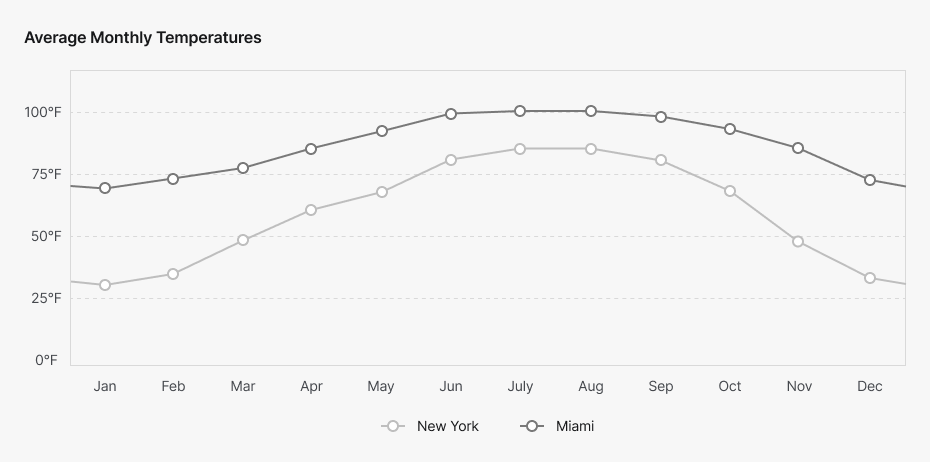
Life in New York City is defined by its four distinct seasons. Winters can be cold and snowy, providing classic holiday charm but requiring heavy coats and boots. Spring brings a refreshing bloom to the city's parks, while summers are hot and humid, often leading residents to seek air-conditioned solace or weekend escapes. Autumn is arguably NYC's most beloved season, with crisp air, vibrant foliage, and comfortable temperatures perfect for walking and exploring.
Miami, on the other hand, lives in a perpetual state of summer. Its tropical climate means warm to hot temperatures year-round, with high humidity and daily afternoon thunderstorms during the summer wet season (June-October). Winters are mild and pleasantly warm, making it a popular escape for those fleeing colder climates. While hurricane season is a consideration (June-November), Miami residents are well-prepared for potential storms. Your wardrobe and outdoor activities will be vastly different depending on which city you choose!
Demographics
The people who call a city home shape its culture, character, and daily rhythm. New York City and Miami are both renowned for their diversity, but the composition and influences of their populations vary significantly.
| Category | New York City | Miami |
|---|---|---|
| Population (City Proper) | ~8.3 million | ~4.5 million |
| Population Density | ~28,000 people/sq mile | ~13,000 people/sq mile |
| Median Age | 37.9 years | 40.2 years |
| Foreign-Born Population | ~36% | ~53% |
New York City is a true melting pot, celebrating a vast array of cultures, languages, and backgrounds. Its population is incredibly diverse, with significant communities from every corner of the globe. This multiculturalism is evident in its cuisine, neighborhoods, and daily interactions. While a large percentage of New Yorkers are foreign-born, the city also draws from every state, creating a dynamic blend of urban and international influences. The median age indicates a vibrant, working-age population.
Miami, while equally diverse, is overwhelmingly influenced by its rich Hispanic and Latino heritage, particularly from Cuba, Central, and South America. This cultural vibrancy permeates almost every aspect of life, from language and music to food and art. A majority of Miami's residents speak Spanish, and the city functions as a key bridge between North and South America. Miami's population is slightly older on average than NYC's, reflecting its appeal to retirees and those seeking a warm, culturally rich environment for their later years. Both cities offer unique opportunities to experience global cultures without leaving the country.
Transportation
TNavigating a city efficiently is paramount, whether for work or leisure. New York City is famed for its public transit system, while Miami is more reliant on personal vehicles, though its transit options are growing.
| Category | New York City | Miami |
|---|---|---|
| Public Transit Access | Excellent | Limited |
| Car Required? | No | Usually |
| Commute Time | 40–60 mins avg | 25–45 mins avg |
| Walkability | Very High | Moderate to High |
New York City boasts one of the most extensive public transportation networks in the world. The MTA subway is the lifeblood of the city, running 24/7 and connecting nearly every neighborhood. Buses and commuter rails (LIRR, Metro-North, NJ Transit) further extend reach into the outer boroughs and suburbs. This robust system means that most New Yorkers do not own cars, relying on public transit, walking, biking, or ride-shares. While commutes can be long, the efficiency of the subway largely mitigates traffic concerns within the city. NYC is truly a walker's paradise, with high walkability scores in most areas.
Miami, while growing its public transit, is still largely a car-dependent city. The Metrorail and Metromover serve limited areas, primarily downtown and along major corridors. Buses cover a wider range but can be subject to traffic delays. Most residents rely on personal vehicles for daily commutes, which means dealing with Miami's often-congested roadways. While efforts are underway to expand public transit and cycling infrastructure, a car is generally considered essential for full mobility in Miami. Your commute experience will be drastically different between these two cities.
Family Life & Education
For families and those seeking higher education, the quality and availability of schools are paramount. Both New York City and Miami offer a range of educational opportunities, from top-tier universities to diverse public school systems.
| Category | New York City | Miami |
|---|---|---|
| Public Schools | Varied (some elite) | Improving, above avg |
| Private School Cost | Very High | More affordable |
| Family Activities | Parks, Museums | Beaches, Parks, Zoos |
| Outdoor Space | Limited | Abundant |
New York City offers a vast and varied educational landscape. Its public school system, managed by the NYC Department of Education, is the largest in the United States, serving over a million students across thousands of schools. While quality can vary by neighborhood, many NYC public schools are highly regarded. The city is also home to an impressive concentration of world-class universities, including Columbia University, New York University (NYU), and Fordham University, alongside the extensive CUNY (City University of New York) system. These institutions attract students and faculty globally, contributing to the city's intellectual vibrancy and offering lifelong learning opportunities.
Miami is served by the Miami-Dade County Public Schools, one of the largest school districts in the nation. This district has made significant strides in recent years, with a strong focus on magnet programs and specialized academies, leading to impressive graduation rates. For higher education, Miami boasts the University of Miami (UM), a prestigious private research university, and Florida International University (FIU), one of the largest public universities in the U.S. FIU is particularly known for its diverse student body and strong programs in international business and engineering. Both cities provide a range of educational paths, though NYC offers a broader spectrum of elite institutions.
Savings at a Glance: NYC vs. Miami
Here's a breakdown of the estimated monthly savings you could realize by choosing Miami, based on average expenses compared to New York City
| Category | Estimated Monthly Savings |
|---|---|
| Rent | $1,400+ |
| Utilities | $45+ |
| Taxes | Varies ($1,000s yearly) |
| Dining/Groceries | $200+ |
| Overall Monthly | ~$1,700–$2,200 |
Making the move from NYC to Miami isn’t just about sunshine — it could also mean serious savings, more space, and a more relaxed lifestyle. From lower taxes to year-round warmth, Miami is a compelling choice for both individuals and families looking to upgrade their quality of life.
Ready to explore a new life in Miami? Compare moving quotes from trusted professionals and see how much you can save today.
Get Free QuotesFrequently Asked Questions
Expert Moving Guides & Tips
Ready to make your move?
Compare quotes, get expert guidance, and book with confidence.